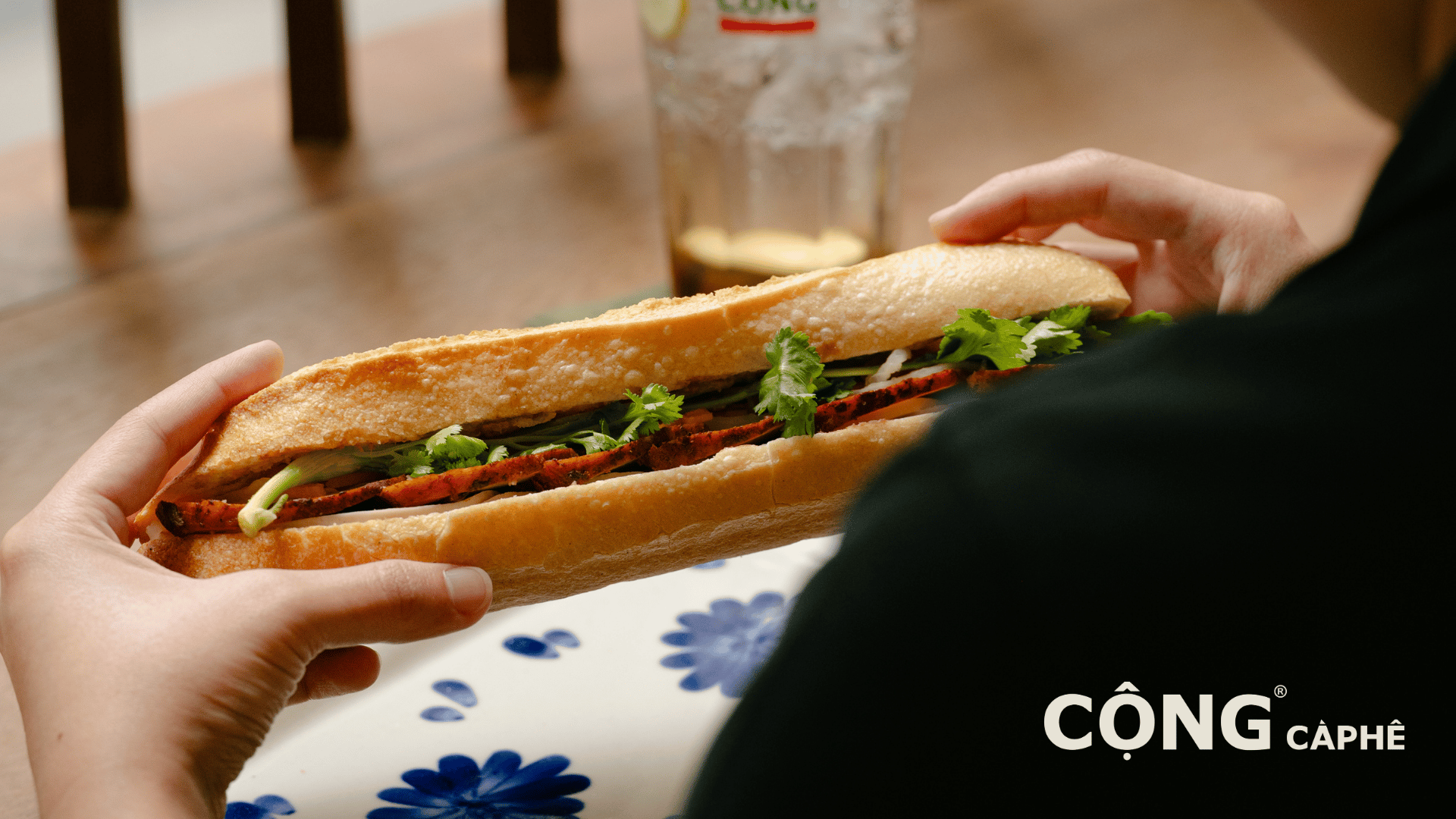
For many Vietnamese cuisine enthusiasts, bánh mì is one of the first foods they hear about. Crisp bread, savoury fillings, fresh herbs, and pickled vegetables have made it one of the country’s most recognisable dishes around the world.
If you are curious about banh mi Vietnam and want to understand how locals actually enjoy it, here is what to know before taking your first bite.
What Is Real Bánh Mì?
At first glance, bánh mì may look like a sandwich built around a baguette. But in Vietnam, it is much more than that. The bread itself reflects a long culinary exchange between Vietnam and France. Over time, Vietnamese bakers adapted the French baguette into something lighter, crispier, and easier to eat on the move. The crust remains delicate and crisp, while the inside feels airy rather than dense.
But what truly makes banh mi Vietnam distinctive is what happens inside.Vietnam gradually transformed the sandwich with local ingredients and carefully balanced textures, creating something entirely its own.
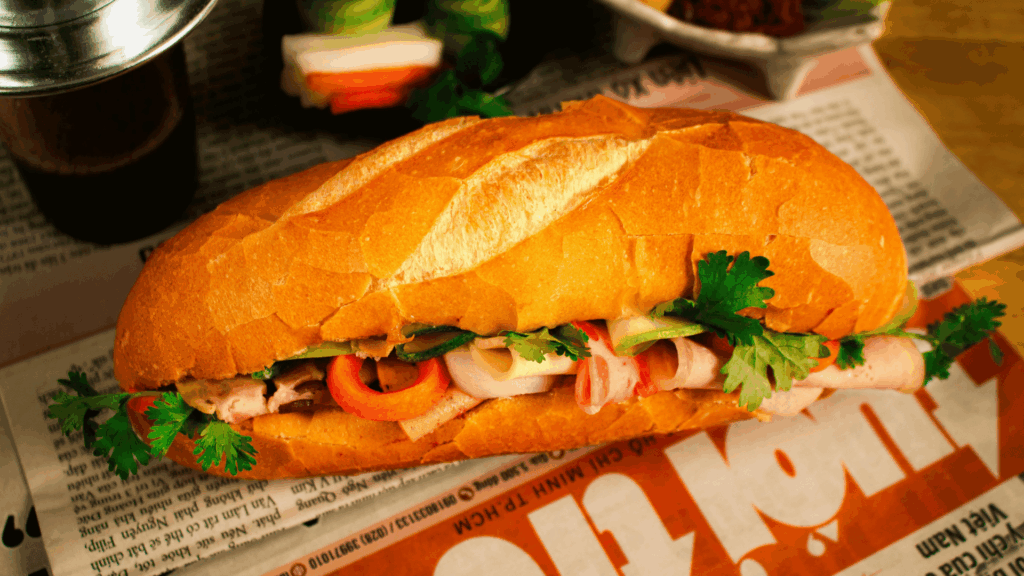
The bread is lighter and crispier than a traditional French baguette, with a delicate crust and airy interior that holds the filling without feeling heavy.
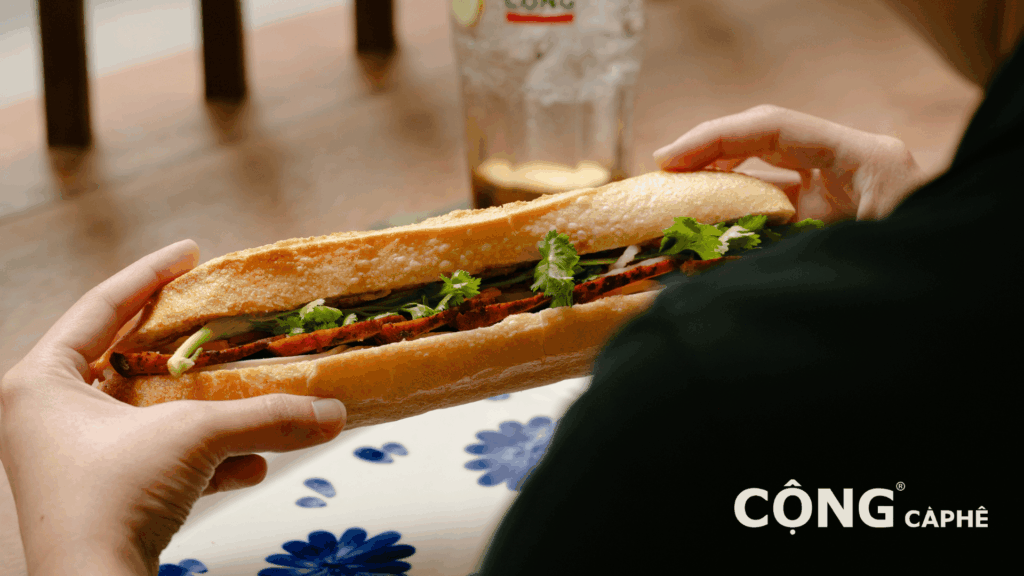
The filling – depending on the region and shop, fillings can range from grilled meats, char siu, chicken, eggs or cold cuts. The filling is prepared to bring depth and flavour while staying balanced rather than overwhelming.
The condiments which are pâté, pickled carrot and daikon, cucumber, fresh coriander, and optional chilli, adding richness, freshness, acidity, and crunch in equal measure.
How Vietnamese People Actually Eat Bánh Mì
Visitors sometimes imagine there is a proper way to eat bánh mì, but in Vietnam, the experience is usually uncomplicated. Convenience matters as much as flavour, which is why bánh mì fits naturally into everyday life.
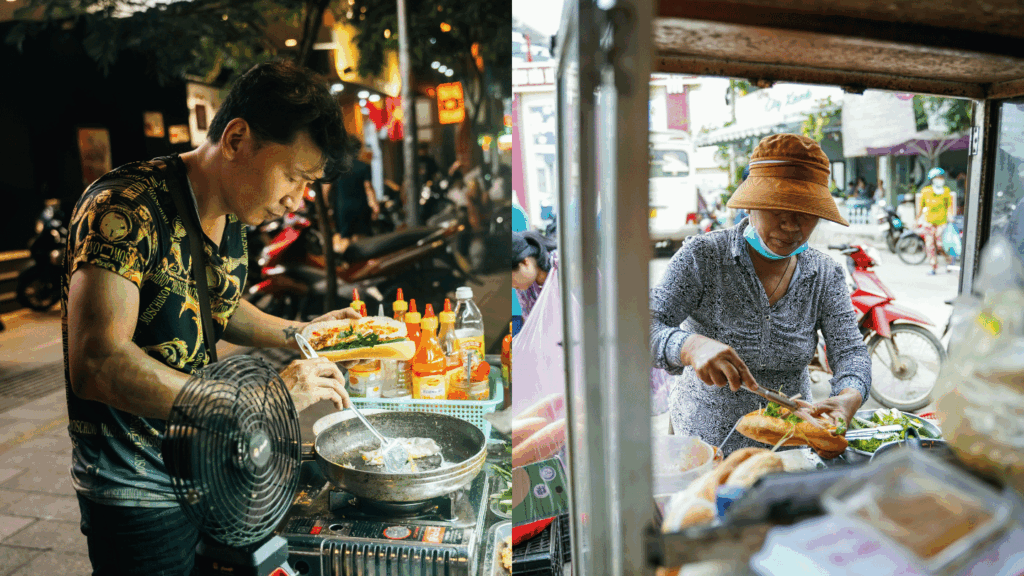
It is usually eaten with your hands. Bánh mì is designed to be practical: wrapped in paper, easy to carry, and often eaten while walking, commuting, or taking a short break between errands. You are far more likely to see someone eating it on the go than sitting down with a knife and fork.
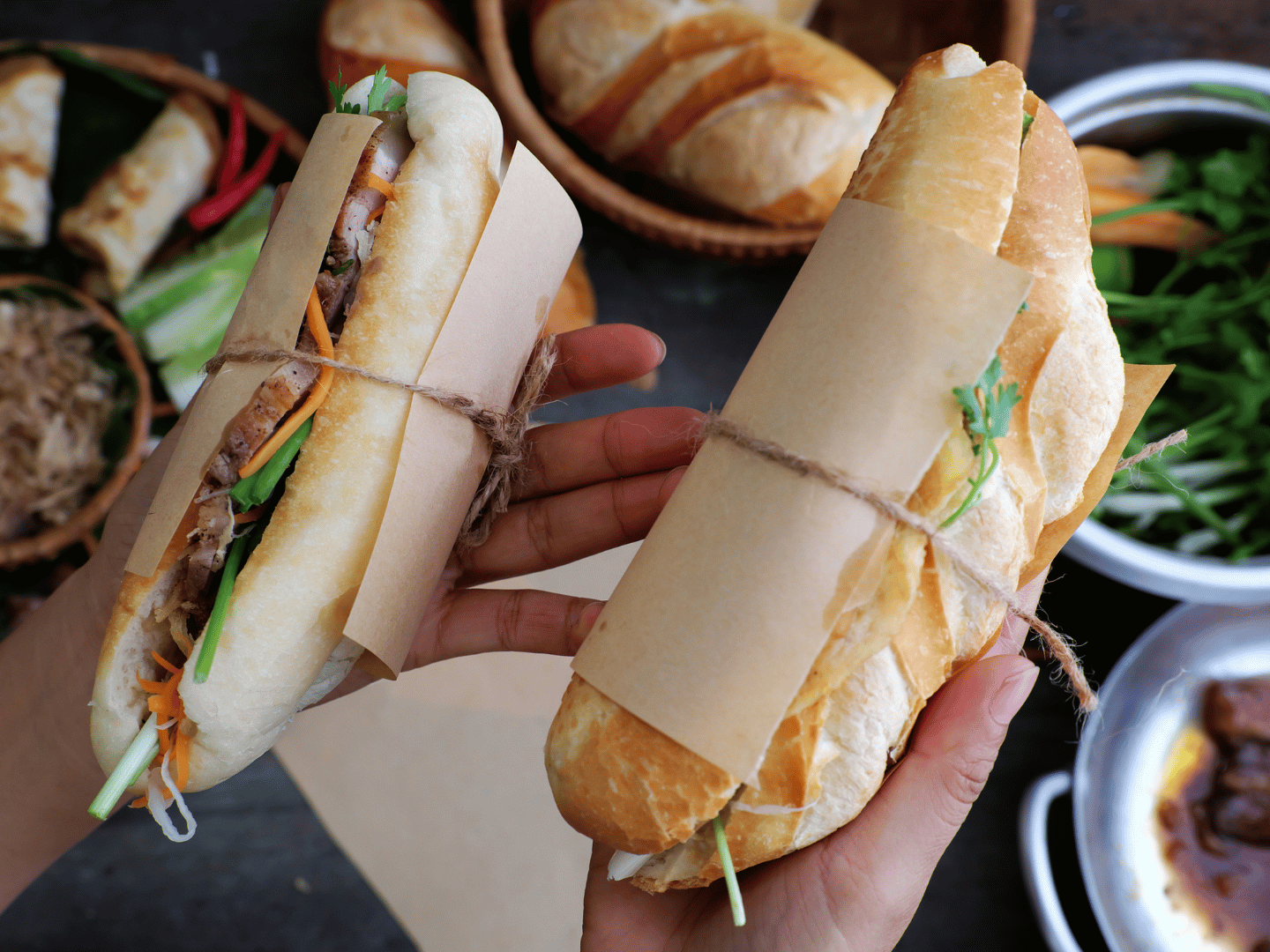
Breakfast is one of the most common times to eat it. Across Vietnam, many bánh mì shops open early because locals often grab one before work or school. A warm sandwich paired with coffee is a familiar morning ritual, especially for people looking for something quick but satisfying.
The first bite should go through all layers at once: bread, pâté, protein, pickle, herb, chilli. A bite that catches only the bread, or only the filling will miss the point. The sandwich is designed to be experienced as a whole, not in sequence.
Drinks are often part of the experience. Vietnamese people frequently pair bánh mì with coffee, iced tea, or fruit drinks depending on the time of day and the filling. Richer flavours like char siu pork work naturally with strong Vietnamese coffee, while lighter fillings often feel refreshing alongside citrus or fruit-based drinks.
Most locals have a favourite order. Rather than choosing something different every time, many Vietnamese people return to the same filling they know and enjoy. Some prefer flavourful char siu options, while many keep things classic with pâté or egg.
Popular Types of Bánh Mì in Vietnam
There is no single “correct” bánh mì. Across Vietnam, different fillings reflect local preferences and personal taste.
Egg and pâté – A simpler but classic option, often eaten in the morning.
Char siu pork – Rich, savoury, and slightly sweet, char siu pork bánh mì remains one of the most satisfying options. Tender pork pairs naturally with pickled vegetables and herbs, creating contrast without becoming overly heavy.
Grilled chicken – For something lighter, grilled chicken bánh mì offers a more delicate flavour profile while keeping the freshness and crunch that define the sandwich.
Roasted pork – Filled with crispy roasted pork, the meat carries a gentle balance of savoury and slightly sweet flavours, while the crackling skin becomes the real highlight.
Where to Eat Banh Mi in Paris
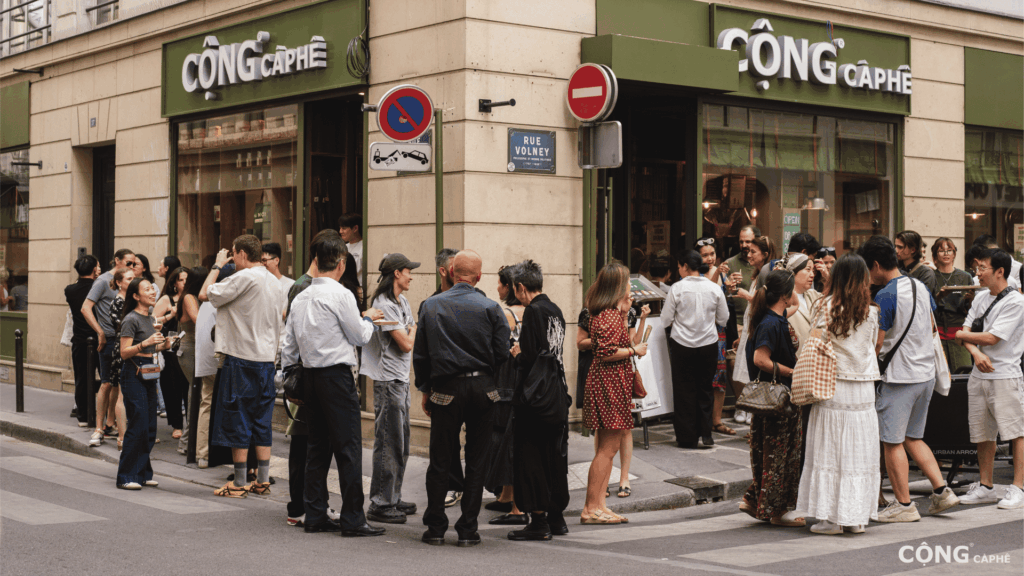
Cộng Cà Phê France opened at 18 Rue Volney, in the 1st arrondissement of Paris, as the brand’s first European location and the only address in Europe where the full Cộng experience is available.
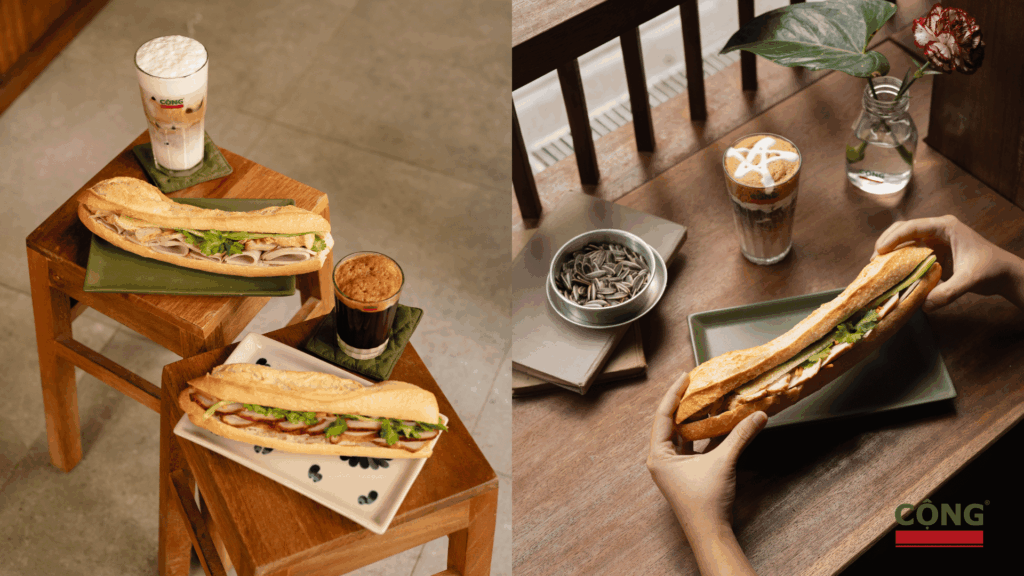
Bánh mì is served here as a snack alongside the full Cộng coffee menu – 100% Robusta phin coffee from Lâm Đồng, coconut coffee smoothies, Vietnamese teas and local drinks. The two variations are Banh Mi with Char Siu and Chicken Banh Mi, both assembled in the Vietnamese tradition: bread, pâté, filling, pickled vegetables, fresh herbs, chilli. The natural pairing is a cà phê sữa đá or a cà phê cốt dừa – the same combination that defines a Vietnamese morning, now available in the centre of Paris.
Frequently Asked Questions About Bánh Mì Vietnam
What does bánh mì mean in Vietnamese? Literally, “wheat bread.” Over time, the term came to mean specifically the Vietnamese sandwich. When someone says bánh mì in Vietnam, the sandwich is what they mean.
What is the traditional filling of bánh mì in Vietnam? The most common traditional fillings include pâté, grilled/roasted pork meat and char siu pork for the meat versions, alongside pickled daikon and carrot, cucumber, coriander, and chilli. Regional variations exist across the country.
How is bánh mì different in northern and southern Vietnam? Southern versions tend to be more abundant with more filling, more sauce, often a sweeter flavour profile. Northern versions, including those with Hanoi roots, are more restrained: the flavours are more concentrated, the balance leaning toward savoury depth. The bread is often crispier in the north.
Is bánh mì eaten for breakfast in Vietnam? Yes, primarily. Bánh mì carts typically open before dawn and sell out by mid-morning. It is one of Vietnam’s most common breakfast foods, eaten quickly on the way to work or school.
Can I eat bánh mì with coffee at Cộng? Yes, and it is the recommended combination. A bánh mì alongside a Vietnamese phin coffee or a cà phê cốt dừa coconut smoothie reflects exactly how the two are enjoyed together in Vietnam.
Looking for Vietnamese bánh mì in Paris? Visit Cộng Cà Phê to try classic flavours like char siu pork, or grilled chicken and experience one of Vietnam’s most iconic everyday foods in a relaxed café setting.Visit congcaphe.fr to explore the full menu.
Leave a Reply