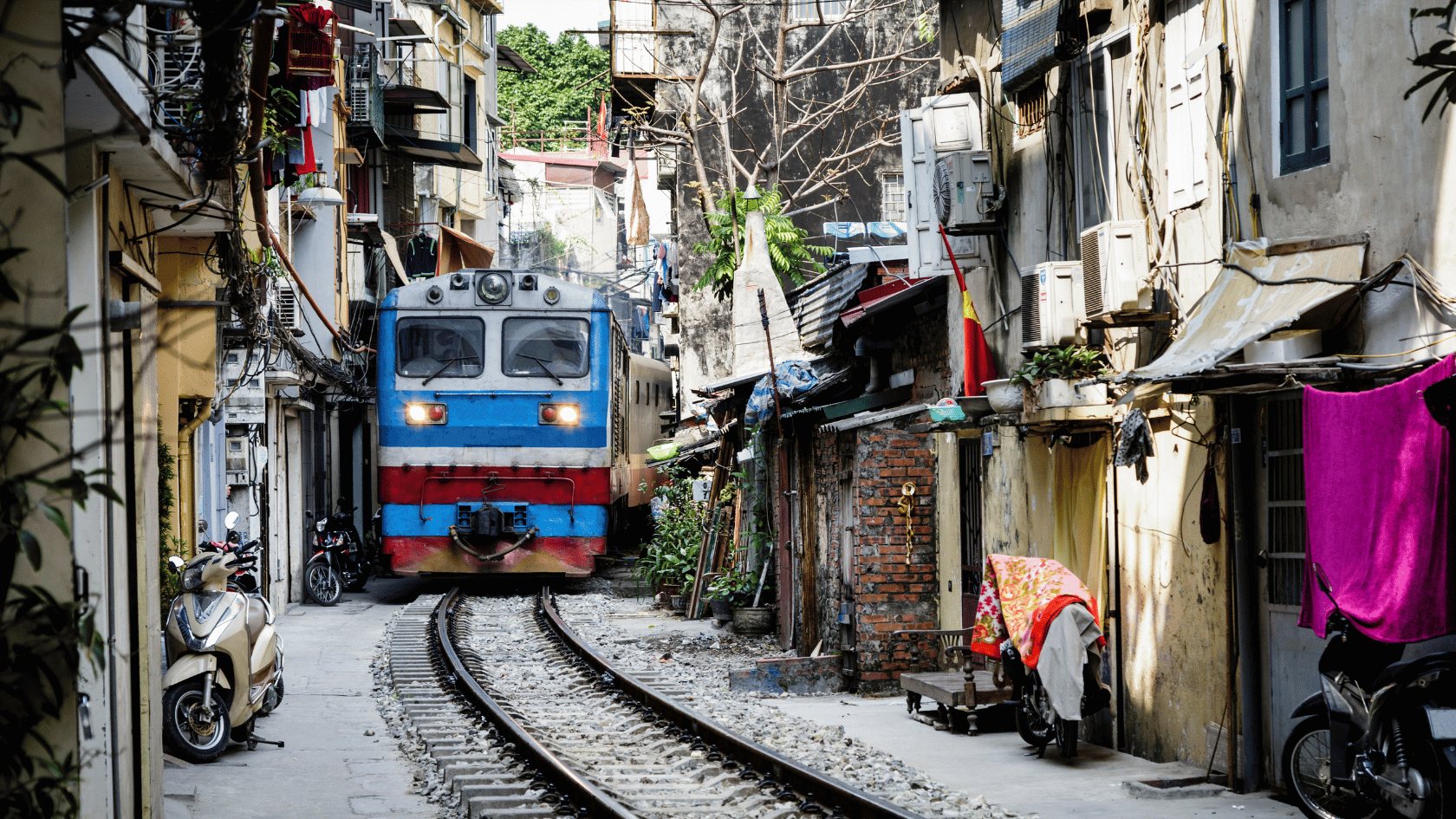
Hanoi Train Street is a narrow stretch of residential railway in the city’s Old Quarter, where homes and small cafés sit within centimeters of an active train line. Officially spanning parts of Trần Phú and Điện Biên Phủ streets, it became internationally famous through photos and videos of tourists sipping coffee just inches from a passing train. What began as an overlooked residential corner has turned into one of Hanoi’s most recognizable attractions, offering a rare, close-up view of daily Vietnamese life unfolding beside working infrastructure.
What Is Hanoi Train Street?
A Residential Street Built Along a Working Railway Line
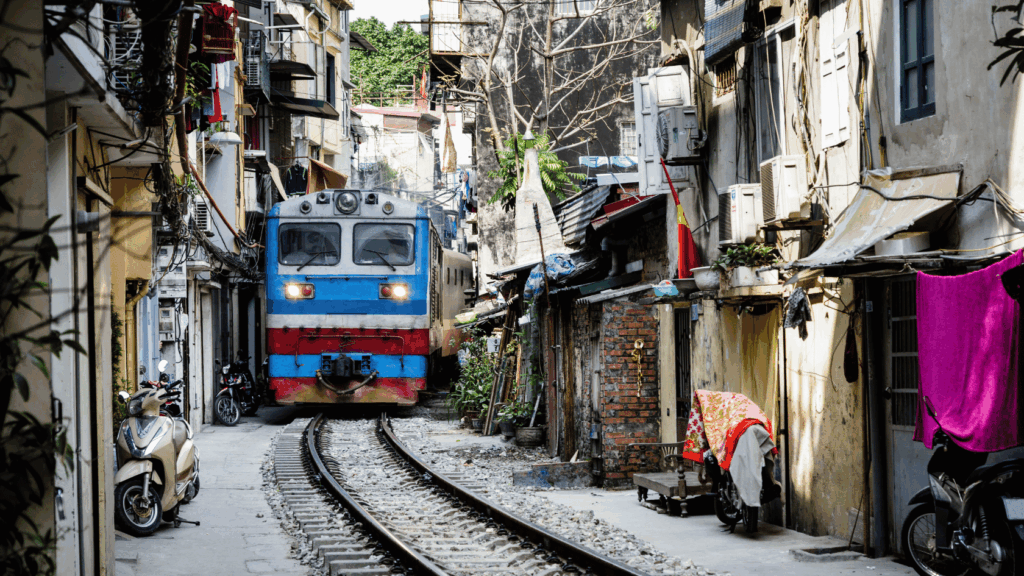
The street exists because the railway predates the neighborhood’s density. Homes were built directly alongside the tracks over decades, and residents have long adapted their daily routines, cooking, laundry, sitting outside, around the rhythm of trains passing multiple times a day. Cafés, homes, and shops sit as close as 20 to 50 centimeters from passing trains, a proximity that occurs multiple times daily along the roughly 300-meter stretch.
How It Became a Global Photography and Social Media Phenomenon
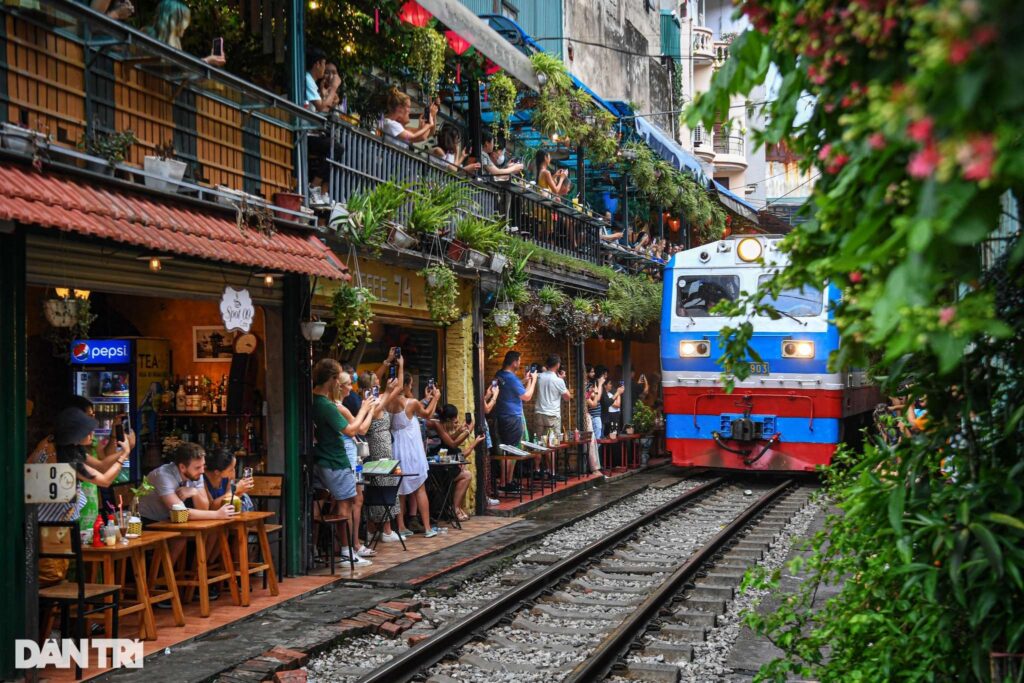
The combination of a speeding train squeezing through a narrow lane and tourists sipping coffee just feet away produced some of Vietnam’s most widely shared travel photography, and the image spread quickly online in the late 2010s. That visibility turned a quiet residential lane into a bucket-list stop, drawing enough visitors that local authorities have periodically had to manage crowding and safety around the tracks.
Why Train Street Became Famous for Its Cafés
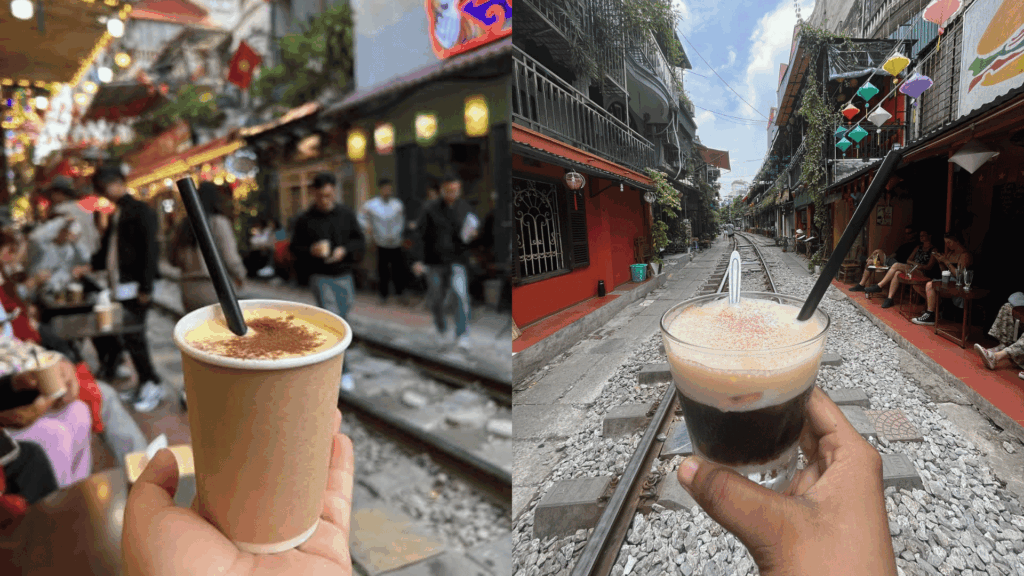
The street’s fame is inseparable from its cafés. Small operations opened directly along the rails, offering low stools, cold drinks, and a front-row seat to the train’s approach. When a train nears, café owners typically clear tables and direct visitors back behind a safety line, then everyone waits together for the rush of the train passing within arm’s reach before returning to their seats. It is a shared, almost theatrical ritual, equal parts hospitality and choreography, and it is what turned Train Street from a photo opportunity into a genuine café experience.
This pairing of coffee culture with everyday Vietnamese life is not unique to Train Street. It reflects something broader about how coffee functions across Hanoi, less as a quick transaction and more as a reason to sit, watch, and take in the surroundings.
How to Visit and What to Experience
Access to Train Street has shifted over the years as authorities balance tourism with resident safety, and current visitors are generally guided in through a café rather than wandering the tracks freely. The most reliable approach is to indicate you’re a customer looking for coffee and let a café staff member bring you in, which allows entry through what has become a store-led access system. Timing a visit around the train itself takes some flexibility, since schedules can shift by fifteen minutes or more and are best confirmed with café staff on arrival.
Once seated, the drink list mirrors Hanoi’s wider coffee tradition rather than anything exclusive to the street itself:
- Egg coffee, whipped egg yolk and condensed milk poured over strong coffee, the drink most associated with Hanoi’s café culture.
- Black coffee, brewed slowly through a phin filter, unsweetened and often served over ice.
- Coconut coffee, coffee blended with thick coconut cream for a cooler, creamier variation.
- Brown coffee, coffee combined with condensed milk for a simpler, sweeter everyday cup.
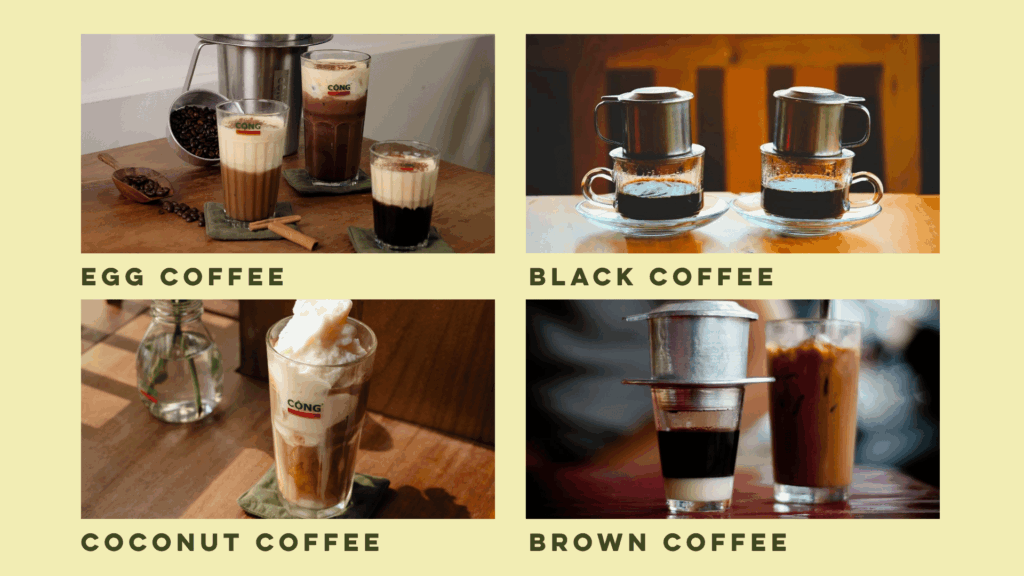
None of these drinks were invented on Train Street specifically. They are staples of Hanoi coffee culture generally, and Train Street’s cafés simply serve them with an unmatched backdrop.
A Taste of Hanoi’s Coffee Culture in Paris
Watching a train rush past a café table is not something that translates to Paris, but the coffee culture behind it does. Cộng Cà Phê was founded in Hanoi in 2007, built around the same Robusta-based phin coffee tradition that fills the cups along Train Street, and the same instinct to treat a coffee break as something worth lingering over rather than rushing through. At 18 Rue Volney in the 1st arrondissement, that spirit continues through phin-brewed coffee, a bao cấp-era interior drawn from Hanoi’s own recent history, and drinks like the brand’s coconut coffee that echo the same flavors found in cafés across the Vietnamese capital.
For anyone whose curiosity about Hanoi started with a photo of Train Street, Cộng Cà Phê offers a way to taste that same coffee tradition without leaving Paris.
Frequently Asked Questions
What is Hanoi Train Street? It’s a narrow residential street in Hanoi’s Old Quarter where homes and cafés sit directly alongside an active railway line, known for the striking proximity between daily life and passing trains.
Is Hanoi Train Street safe? When approached through a café rather than wandering the tracks independently, it is generally considered safe, since staff clear tables and guide visitors behind a safety line as trains approach. Visitors should always follow café staff instructions, stay behind marked lines, and avoid stepping onto the tracks at any time, as safety depends heavily on following the local system rather than assuming casual access.
Is Hanoi Train Street still open to visitors? As of 2026, it remains accessible, though access is generally managed through café owners rather than open free movement along the tracks, and rules can shift with little notice.
What time do trains pass through? Timing varies by day and section, with more frequent passes on weekends and evening-heavy schedules on weekdays. Confirming with a café on the day of your visit is the most reliable approach.
Are there cafés directly on Train Street? Yes, small cafés line the tracks and serve as both seating and the main point of entry for visitors, offering staples of Hanoi’s coffee tradition like egg coffee, black coffee, and coconut coffee.
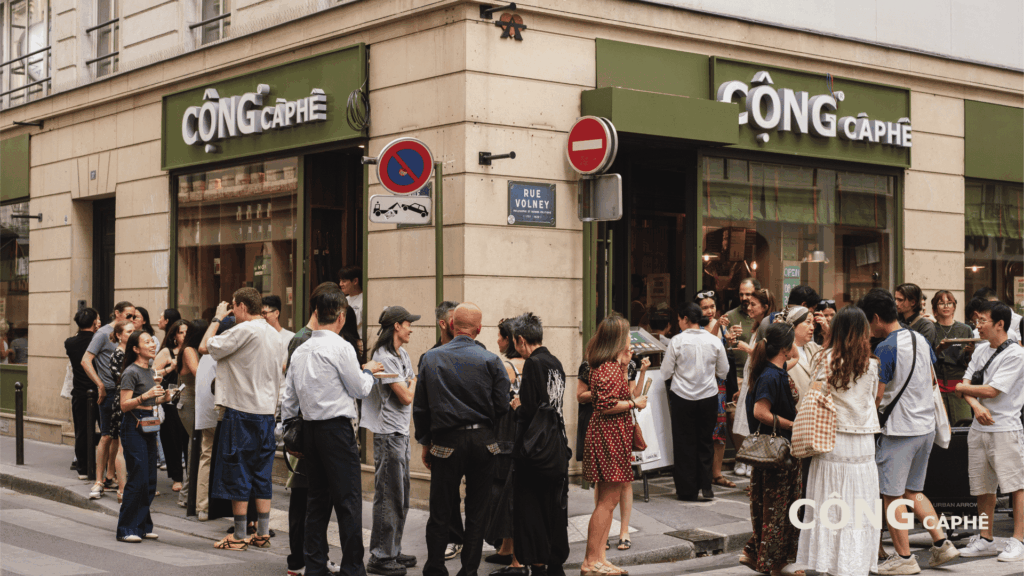
Curious about the coffee culture behind the photos? Follow Cộng Cà Phê France on Instagram and website, or visit 18 Rue Volney, 75001 Paris, to taste Hanoi’s coffee tradition for yourself.
Leave a Reply