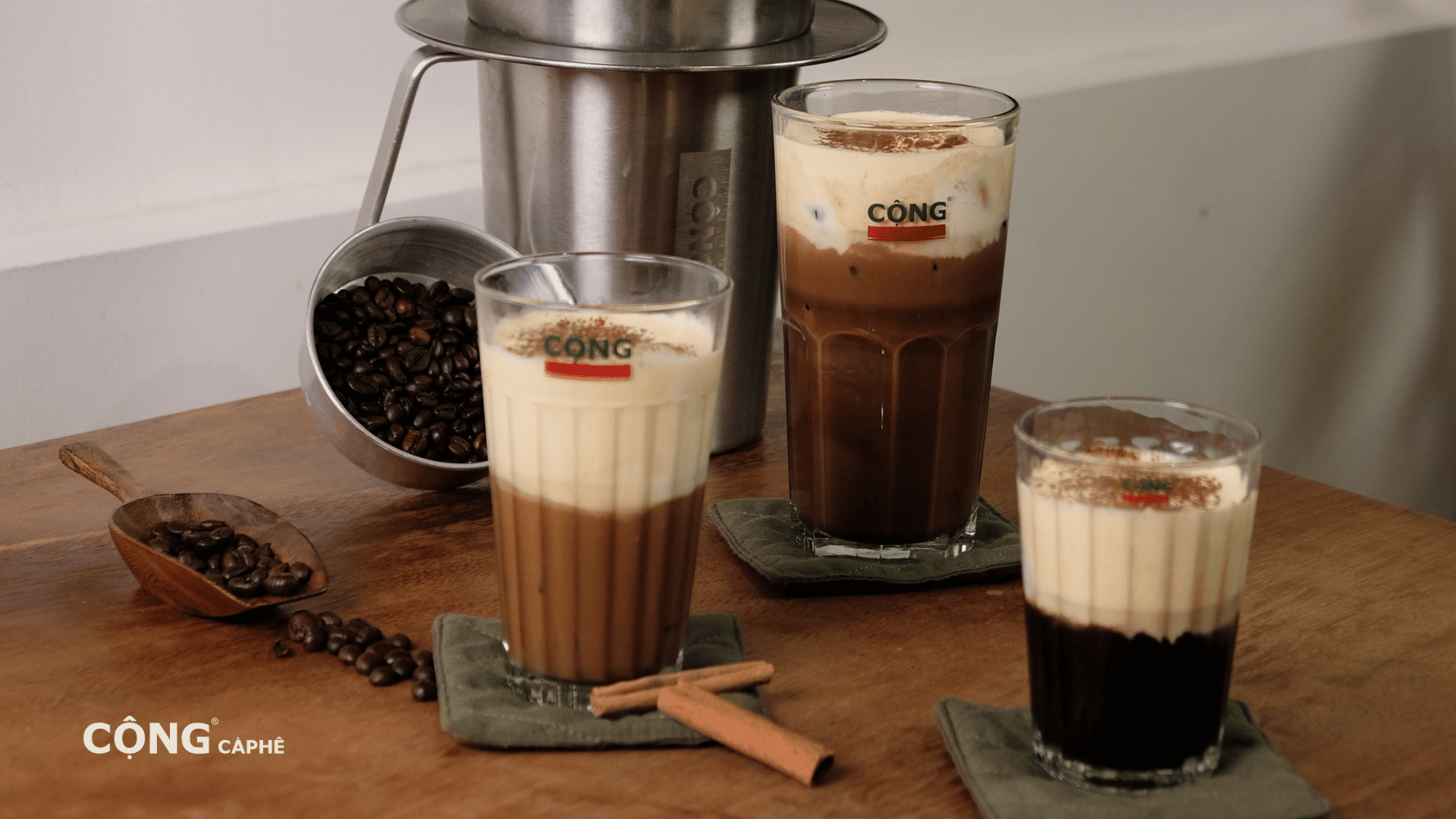
More coffee lovers are searching for an egg coffee recette after encountering the drink on social media, during a trip to Vietnam, or through a growing wave of Vietnamese cafés opening abroad. Vietnamese egg coffee, cà phê trứng, is one of Hanoi’s most distinctive culinary exports, a drink that trades steamed milk for a whipped egg yolk cream and turns an ordinary cup of coffee into something closer to dessert. It travels well in recipe form, and a home version can come impressively close to the original with the right ingredients and a little patience.
That said, recreating it at home and tasting it where the tradition actually lives are two different experiences. For anyone in Paris who wants the full picture after trying the recipe, Cộng Cà Phê’s own take on the format, including its salted egg cream collection, offers a chance to taste a version shaped by real Vietnamese coffee culture rather than a kitchen approximation.
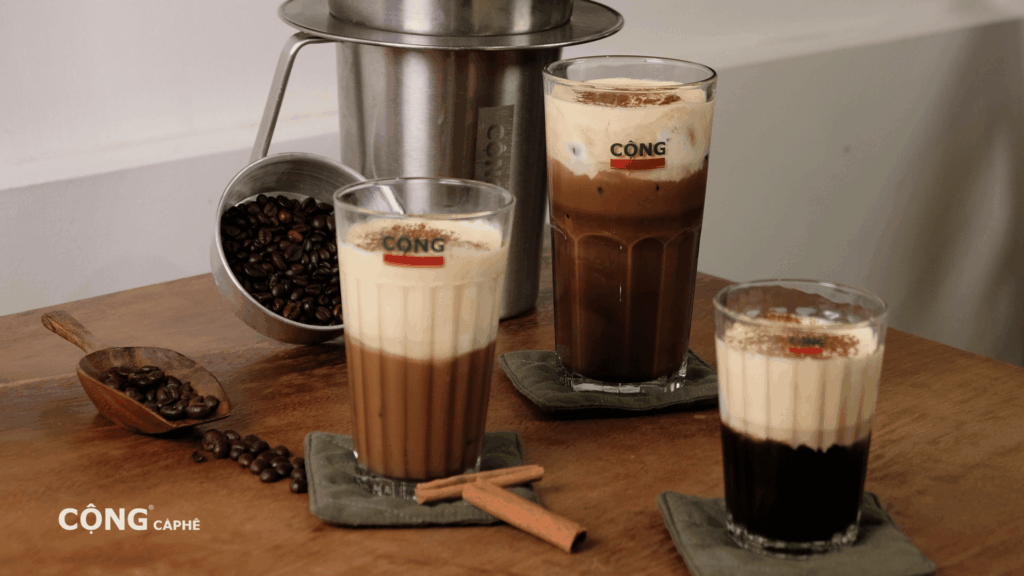
What Is Vietnamese Egg Coffee?
Origin
Egg coffee was created in Hanoi in the 1940s by Nguyễn Văn Giảng, a bartender working at the Sofitel Legend Metropole Hanoi, at a time when fresh milk was difficult to source in Vietnam. He began whipping egg yolks with sugar and condensed milk as a substitute for milk, pouring the mixture over strong coffee. The drink caught on, and the café most closely associated with its invention, Cà Phê Giảng, still serves it in Hanoi’s Old Quarter today.
Flavor Profile
The result sits somewhere between a coffee and a dessert. Beneath a thick, airy cream lies strong, slightly bitter Vietnamese Robusta coffee, and the contrast between the two is the entire point of the drink. Described often as tasting like a tiramisu in liquid form, egg coffee balances sweetness and bitterness in a way that few other coffee drinks attempt.
Why It Became Famous
Egg coffee’s rise beyond Hanoi owes as much to its visual appeal as its flavor. The golden, custard-like foam photographs well, and its unusual premise, coffee made with egg, generates curiosity before a single sip is taken. Combined with Vietnam’s growing global culinary profile, egg coffee has become one of the most searched-for Vietnamese specialties among travelers and home cooks alike.

Ingredients and Equipment You’ll Need
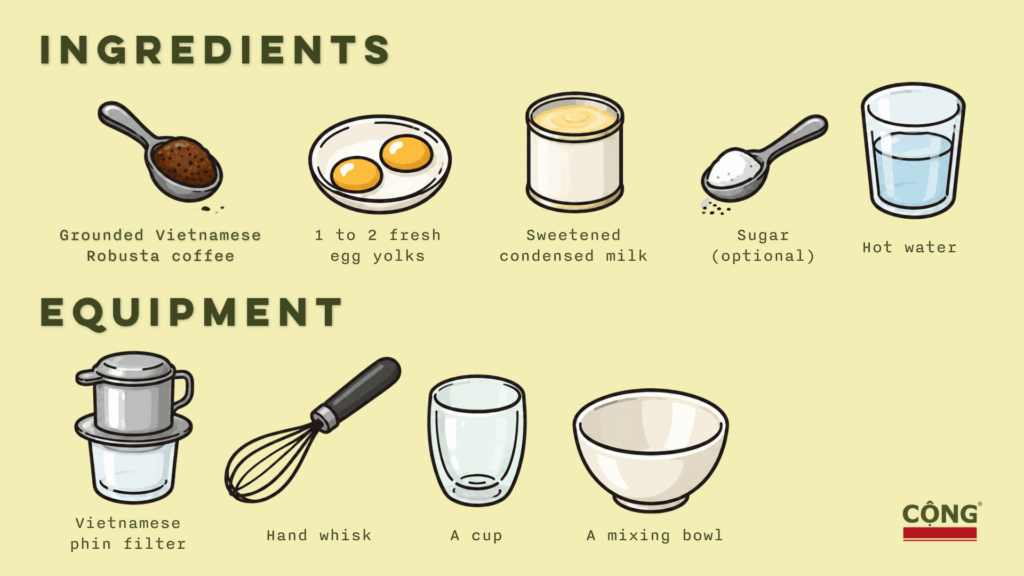
Ingredients
- Vietnamese Robusta coffee, coarsely ground
- 1 to 2 fresh egg yolks per serving
- Sweetened condensed milk
- Sugar, optional, for extra sweetness
- Hot water, just off the boil
Equipment
- A Vietnamese phin filter, recommended for the most authentic result
- A hand whisk or a small milk frother
- A heatproof cup or glass
- A mixing bowl
A note on ingredient quality: Robusta is essential here, not a substitute for Arabica. Its higher caffeine content and bolder, less acidic flavor are what stand up to the sweetness of the egg cream. Fresh egg yolks matter too, since the cream is the defining element of the drink, and the freshest yolks whip into the lightest, most stable foam.
Step-by-Step Egg Coffee Recette
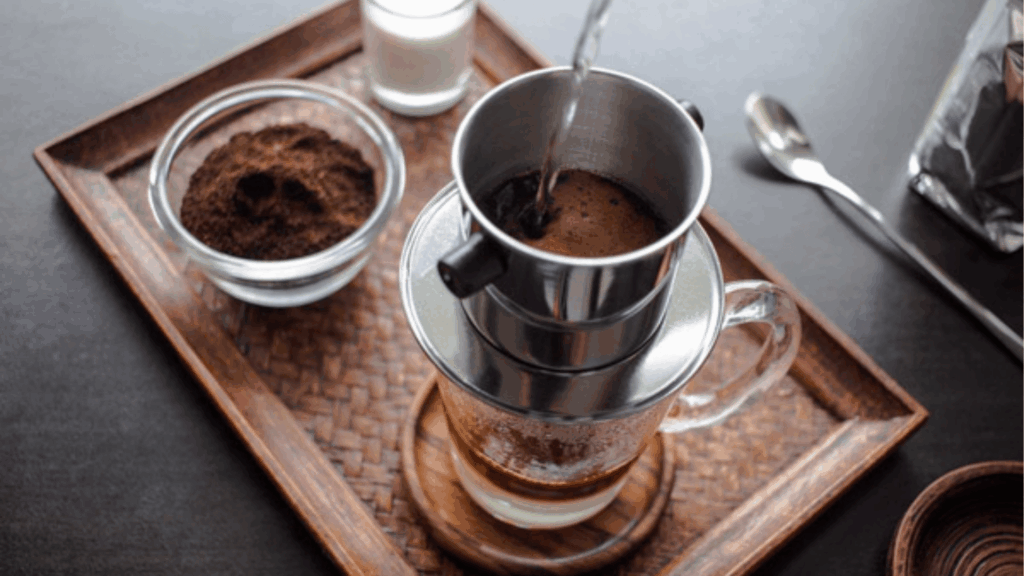
Step 1: Brew the coffee. Add the ground coffee to your phin filter set over a heatproof cup, pour in a small amount of hot water to let the grounds bloom, then top up and let it drip slowly for several minutes. If using an espresso maker instead, pull one or two shots.
Step 2: Whisk the egg cream. In a mixing bowl, combine the egg yolks, a spoonful of condensed milk, and sugar if using. Whisk vigorously for several minutes, by hand or with a frother, until the mixture turns pale, thick, and roughly doubles in volume.
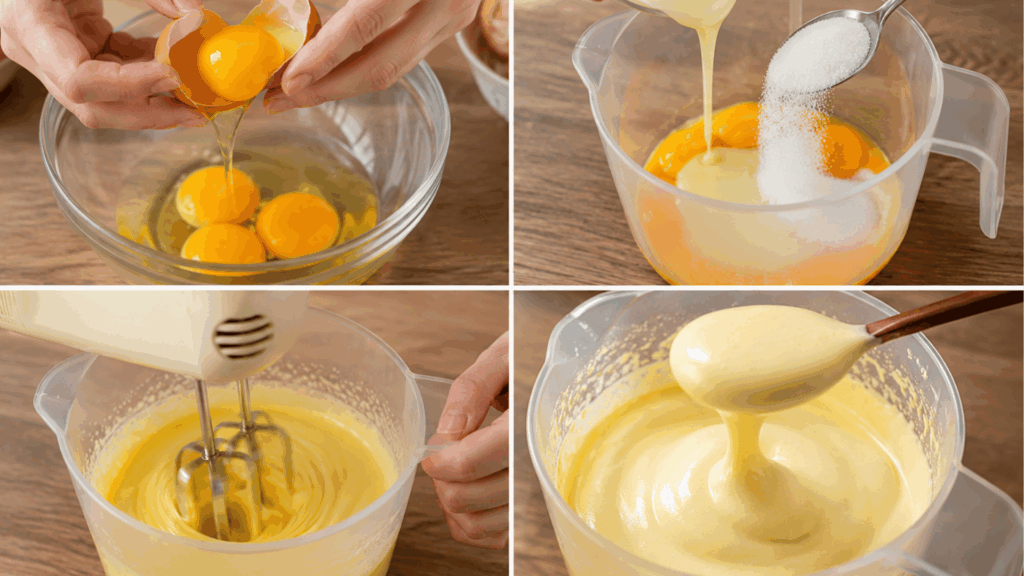
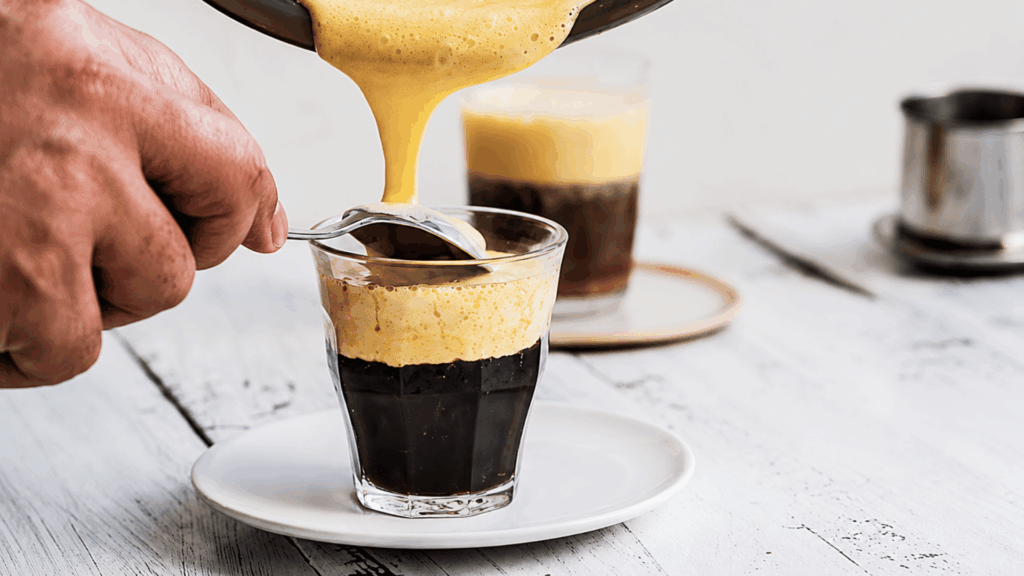
Step 3: Combine. Once the coffee has finished brewing, spoon the whipped egg cream generously on top. Do not stir yet, the layered look is part of the presentation.
Step 4: Serve. For a hot version, serve immediately while the cream still holds its texture. For an iced version, brew the coffee slightly stronger, pour it over ice, and add the cream on top.
Tips for the Best Egg Coffee
- Whisk the egg mixture longer than feels necessary because a thin, runny cream is the most common reason a homemade version falls short of the real thing.
- Use freshly brewed, still-hot coffee under the cream so the two temperatures meet properly when stirred.
- Adjust sweetness gradually. Condensed milk already carries significant sweetness, so add sugar only if you prefer a richer, more dessert-like result.
- Serve in a clear glass if possible, since the layered look is part of what makes the drink distinctive.
Frequently Asked Questions
Can I make egg coffee without a phin filter? Yes. A French press, pour-over, or espresso machine can all produce a strong enough coffee base, though a phin filter gives the most traditional result and controls brew strength most reliably.
Is it safe to use raw egg yolk? Vietnamese egg coffee is traditionally made by gently warming the yolk mixture rather than leaving it fully raw, which reduces food safety concerns. Those who are pregnant, immunocompromised, or otherwise cautious about raw egg can use pasteurized egg yolks as a substitute.
Can I make egg coffee without condensed milk? Condensed milk is central to the traditional texture and sweetness, but a mixture of sugar and cream can approximate it in a pinch, though the result will taste noticeably different from the original.
How long does the egg cream last? Freshly whisked egg cream is best used immediately. If stored, it will hold in the refrigerator for a day or two but will lose some of its airy texture over time.
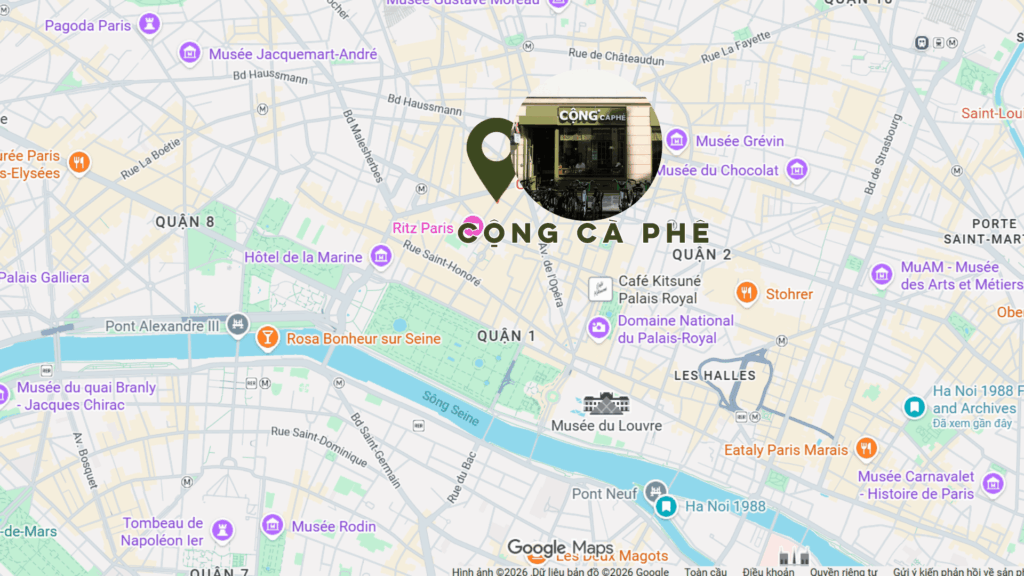
Enjoyed making it at home? Follow Cộng Cà Phê France on Instagram to see how the Vietnamese coffee tradition looks in Paris, or visit 18 Rue Volney, 75001 Paris, to taste the salted egg cream collection made the way a real Vietnamese coffee shop makes it.
Leave a Reply