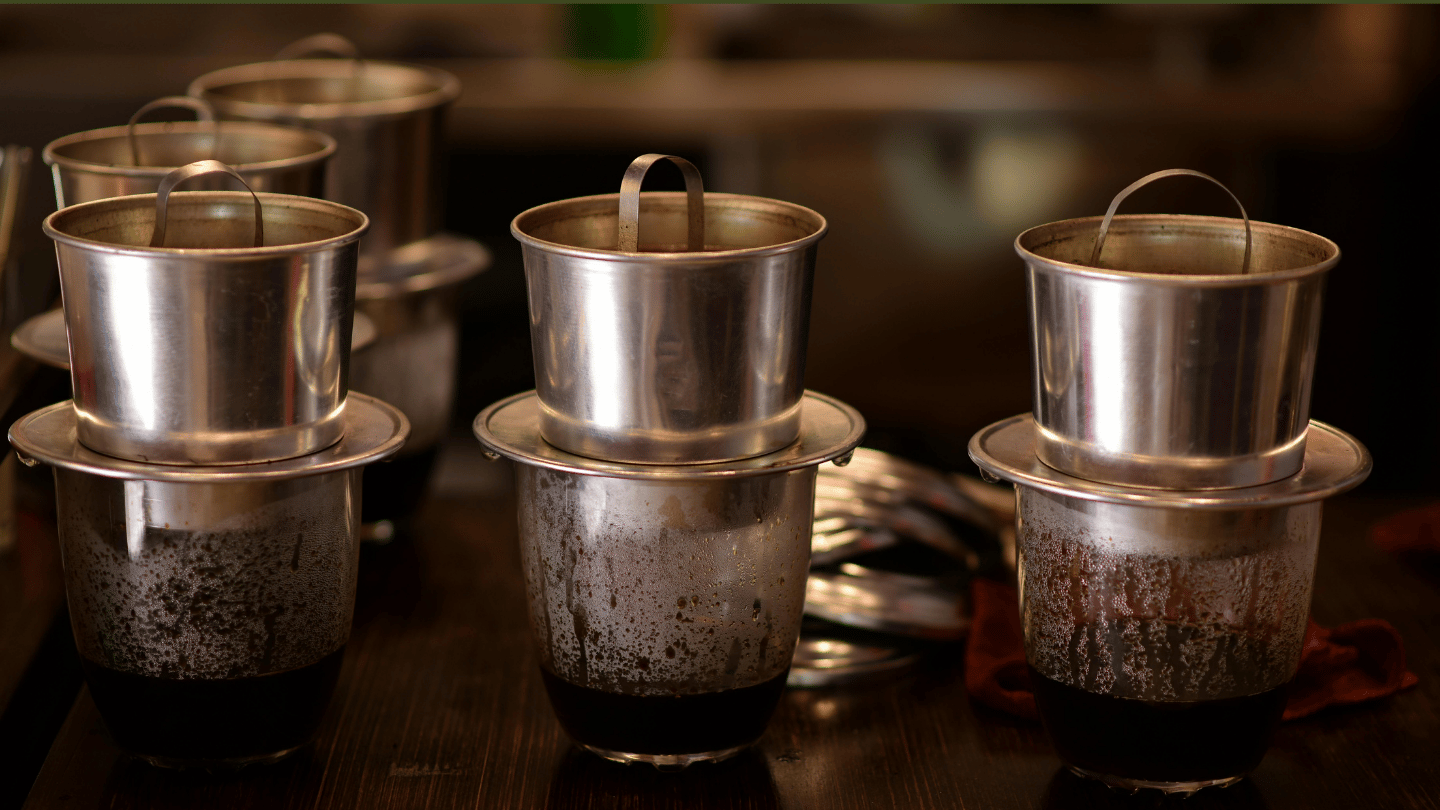
The phin is the four-piece metal filter at the heart of Vietnamese coffee culture. Here’s how it works, what it produces in the cup, and where to taste it in Paris.
Most coffee in Paris arrives in seconds. While an espresso machine builds pressure, forces water through compacted grounds, and delivers the result immediately, the phin (phin filter) works differently. It sits on top of a glass, requires no electricity, no pump, and no technique beyond adding hot water. Then it drips slowly over five to seven minutes until the cup beneath it holds something that no machine can replicate.
Understanding what the phin is, how it works, and what it produces is the most direct way into Vietnamese coffee culture and into what makes a café like Cộng Cà Phê something worth seeking out.

What Is a Café Phin?
A phin (phin filter or Vietnamese drip filter) is a small, single-serve metal brewing device that sits directly on top of a cup or glass. It works without additional equipment, electricity, or complicated setup. Across Vietnam, the phin is part of everyday life. It is used at home and in cafés as the ordinary way coffee is prepared.
In French, café phin (Vietnamese drip coffee) refers both to the filter itself and to the style of coffee it produces: a concentrated, single-serve cup brewed by gravity, typically from Vietnamese Robusta beans. The term appears on menus across Vietnamese cafés in Paris often without explanation, because for anyone who grew up drinking Vietnamese coffee, no explanation is needed.
How Phin Coffee Is Brewed
The process to brew a cup of café phin is simpler to watch than to describe, but its logic is worth understanding.
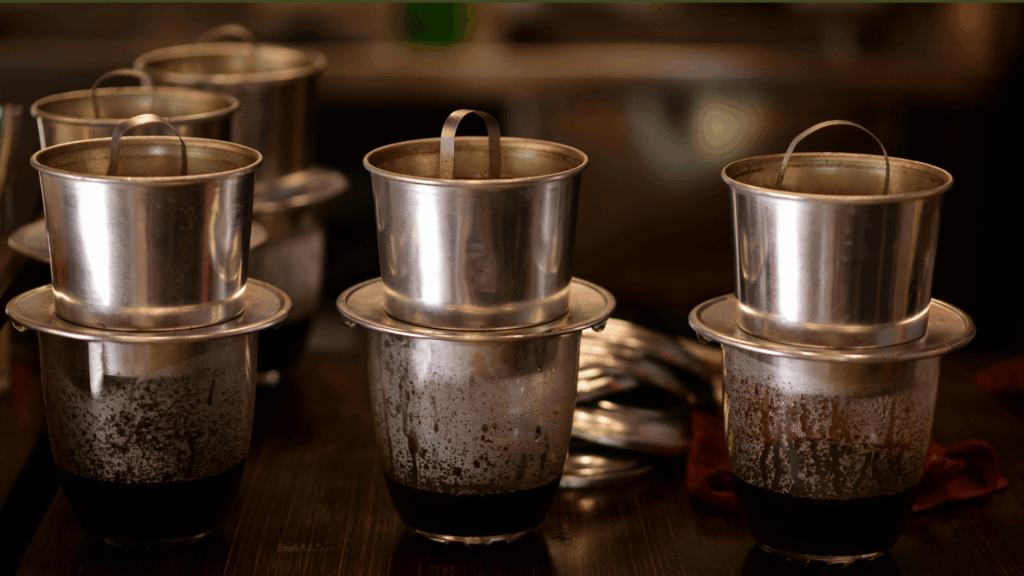
Grounded Vietnamese Robusta coffee at a medium-coarse consistency is added to the chamber. The gravity press is placed on top applying light and even pressure across the coffee bed. A small amount of hot water around 10 to 15 millilitres is poured first to bloom the grounds. The coffee absorbs the water briefly then releases trapped gases and is ready for full extraction. This step improves flavour clarity in the final cup. After the remaining water fills the chamber, the lid goes on and extraction begins.
From this point, nothing is required. The water moves downward through the press, through the grounds, through the filter plate, and into the cup below one drop at a time, driven entirely by gravity. The process takes five to seven minutes. Each drop is visible if you watch.
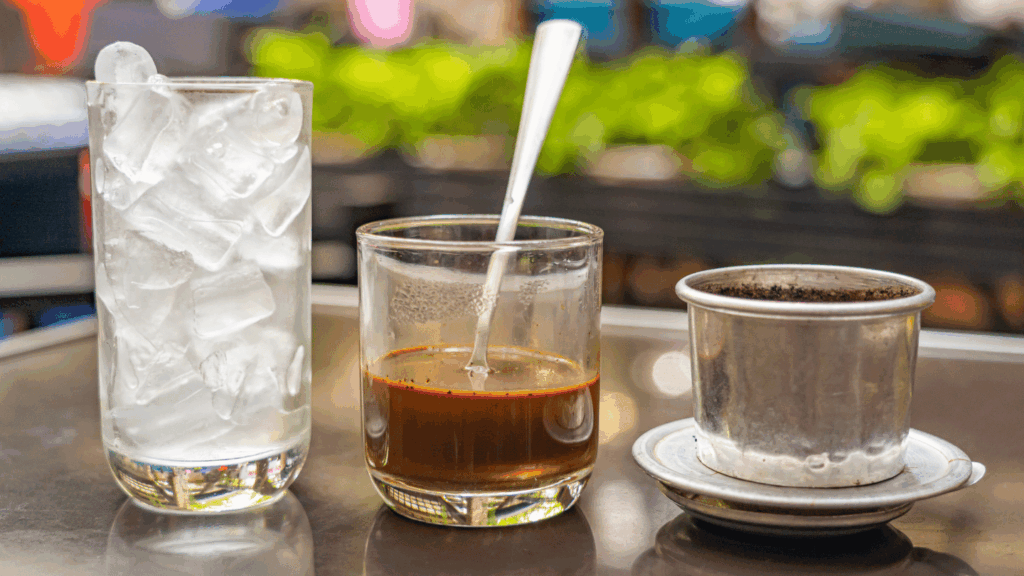
When dripping stops, the phin is lifted away and set on its lid. The coffee below is concentrated, dark, and ready to be served as it is, over ice, or over condensed milk already waiting at the bottom of the glass.
What Phin Coffee Tastes Like and How It Compares
For anyone whose coffee reference points are espresso and pour-over, phin coffee occupies a different register from both. The comparison is useful not to rank them but to locate the phin accurately.
Against espresso, the difference is extraction physics. Espresso forces water through compacted grounds under nine bars of pressure in 25 to 30 seconds, producing a small, intensely concentrated shot characterised by brightness, acidity, and a crema layer. The phin extracts under zero pressure over several minutes. The result is also concentrated, but in a different way: lower in acidity, heavier in body, with a flavour profile that emphasises earthiness and a long, clean bitterness that resolves into something close to natural sweetness. While espresso is sharp and immediate, phin coffee is deep and slow.
Against pour-over methods, the difference is intervention. A V60 or Chemex requires the brewer to control bloom timing, pour rate, and water distribution throughout extraction. The phin automates those decisions: once set up, it works alone. The gravity press introduces a texture to the final cup that most pour-overs do not produce, because no external pressing is involved in those methods.
The flavour profile that results from brewing Vietnamese Robusta through a phin is distinct: bold, low in acidity, naturally earthy, with a body heavier than most Arabica-based drinks and a finish that lingers. This intensity is precisely why Vietnamese coffee culture evolved the tradition of combining phin coffee with condensed milk, coconut cream, or salted egg cream. The phin produces a coffee strong enough to hold its own character against rich, sweet accompaniments.
Why Cộng Cà Phê Uses the Phin
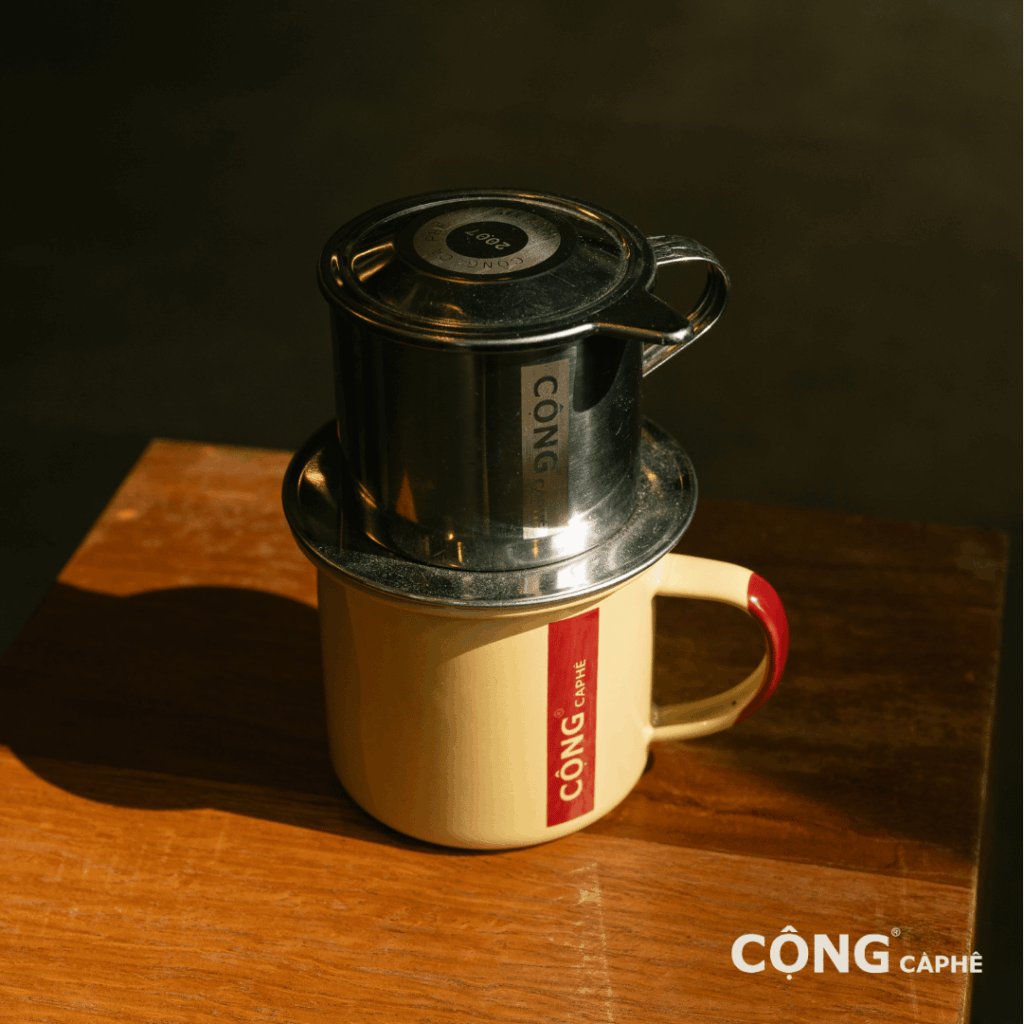
At Cộng Cà Phê, every coffee on the menu begins with the phin. This is not an aesthetic choice or a nod to nostalgia. It is a considered position on what Vietnamese coffee should taste like when made correctly.
Cộng decided to brew coffee using the Vietnamese traditional phin method because it highlights the distinctive qualities of Vietnamese coffee beans, creating a unique flavor that differs from machine-brewed coffee. From the brand’s earliest days on Triệu Việt Vương street in Hanoi in 2007, founder Linh Dung worked with coffee suppliers to develop Cộng’s recipe using a customised phin-based approach. The method and the beans, which are 100% Robusta sourced from the highlands of Lâm Đồng province, were chosen together, each selected to bring out the best in the other.
Serving phin coffee in a Parisian café in 2025 is Cộng’s answer to the question of what Vietnamese coffee should taste like – the same answer it has given since the brand began nearly two decades ago.
Where to Try Café Phin in Paris
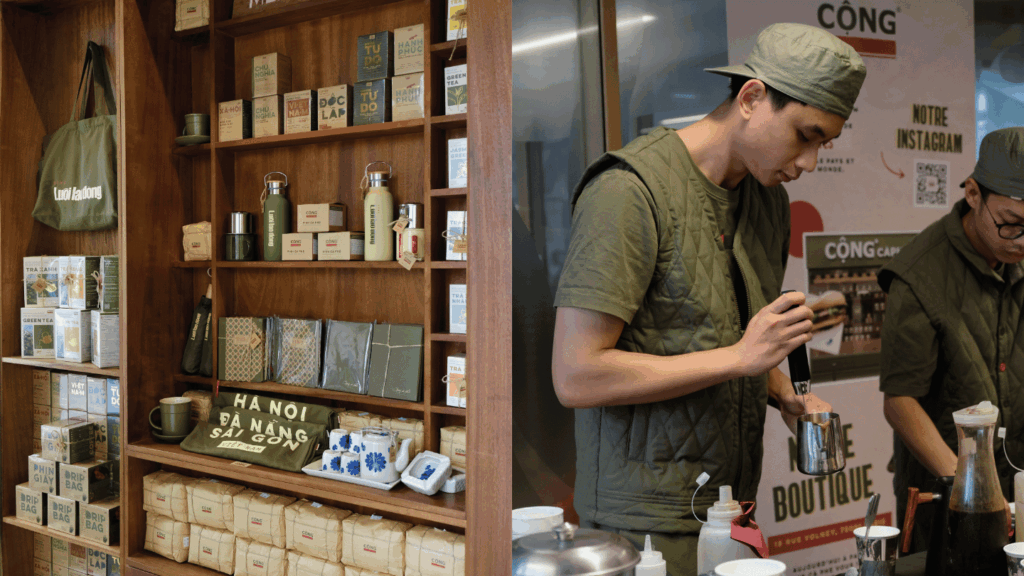
Cộng Cà Phê France, at 18 Rue Volney in the 1st arrondissement, is Cộng’s first European location and the only address in Paris where the full phin-based menu is available. The space carries the aesthetic of old days in Hanoi that defines every Cộng store: handcrafted furniture, enamel cups, objects from Vietnamese daily life arranged with deliberate care.
For a first taste, black phin coffee is the most direct way to understand what the method produces. For more experience, the signature coconut coffee smoothie shows how Robusta brewed through a phin holds its character even when blended with coconut cream and crushed ice. Both are worth ordering. They are the same coffee, experienced two different ways.
Discover the full café phin menu at Cộng Cà Phê France, 18 Rue Volney, 75001 Paris.
Leave a Reply