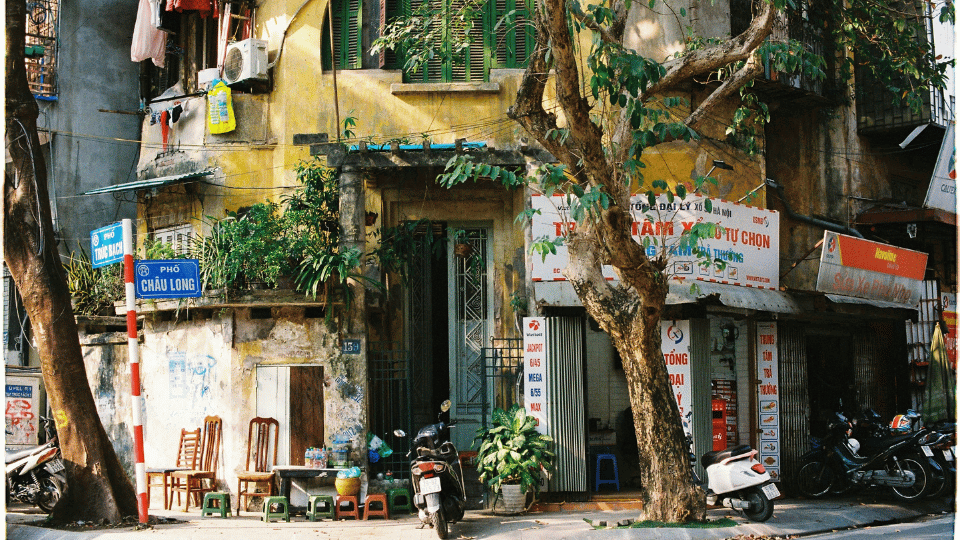
Hanoi is one of Southeast Asia’s most layered cities, a place where thousand-year-old temples share streets with French colonial architecture and some of the world’s finest street food and drinks. Here is what you need to know before you go, and how to bring a piece of it back to Paris.
A City Built on a Thousand Years of History
Hanoi became the capital of Vietnam in 1010, when Emperor Lý Thái Tổ moved the imperial seat to a bend in the Red River and named it Thăng Long, meaning “Ascending Dragon.” Over the thousand years that followed, the city weathered wars, natural disasters, and successive administrations, growing slowly from swamplands into the layered, charismatic capital it is today.
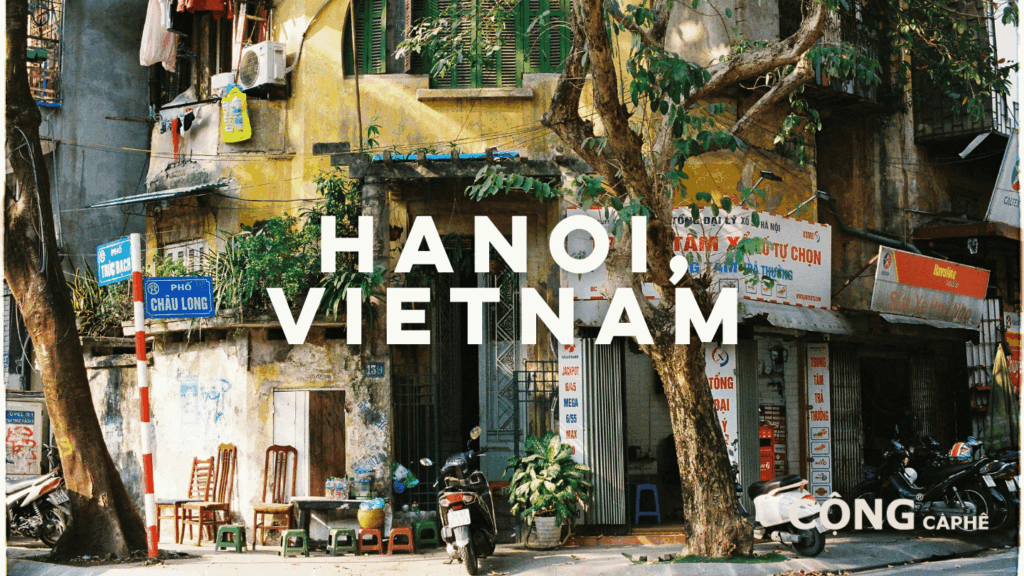
For travelers, that history is not merely background. It is present in the architecture, the food, and the rhythm of daily life in a way that few Asian capitals can match. Hanoi rewards curiosity: whether you come for world-class street food, deeply rooted cultural traditions, affordable exploration, or as a gateway to the breathtaking natural landscapes of Northern Vietnam, the city tends to give back more than you expect.
The sections below cover the essential Hanoi: its most iconic destinations, the dishes and drinks worth seeking out, the best time to visit, and, for those who want to experience the city’s coffee culture without leaving Paris, where to find it.
Hanoi’s Most Famous Destinations
For many visitors, Hanoi is defined as much by its atmosphere as by its landmarks. The city’s most iconic destinations offer a glimpse into its layered history, vibrant street life, and enduring traditions.
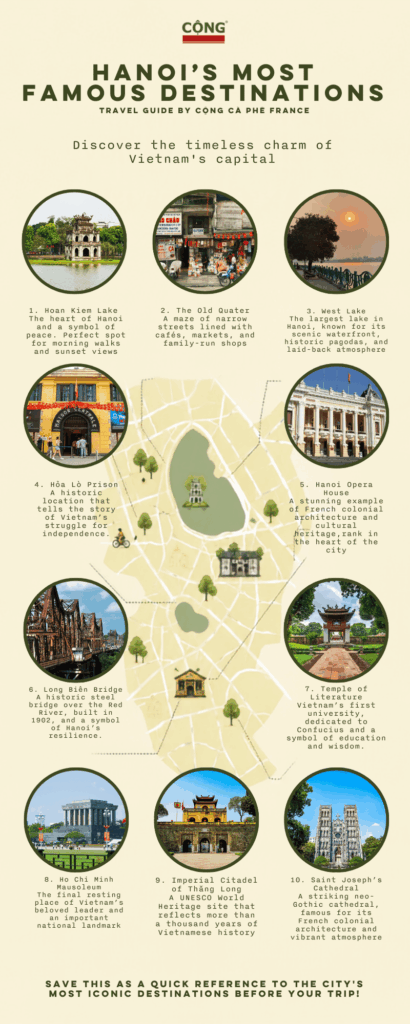
Hoàn Kiếm Lake – The symbolic heart of Hanoi, where locals gather to exercise, stroll, and enjoy the city’s slower pace, especially in the early morning and at sunset.
The Old Quarter – A maze of narrow streets lined with cafés, markets, and family-run shops. It remains the best place to experience Hanoi’s bustling street culture and traditional cuisine.
West Lake is the largest lake in Hanoi, known for its scenic waterfront, historic pagodas, and laid-back atmosphere, making it a popular escape from the busy city centre.
Historical Sites – Hanoi is home to many important cultural landmarks, including the Temple of Literature, the former Hỏa Lò Prison, and the Imperial Citadel of Thăng Long. Together, they tell the story of Vietnam’s scholarly heritage, colonial past, and more than a thousand years of history.
Whether you’re visiting Hanoi for two days or a full week, these landmarks deserve a place on your journey. Save the infographic below as a quick reference to the city’s most iconic destinations before your trip.
What to Eat in Hanoi
Hanoi’s culinary identity is built around dishes that are simple in appearance yet deeply rooted in daily life. From early-morning breakfasts to late-night snacks, these are some of the foods every visitor should try.
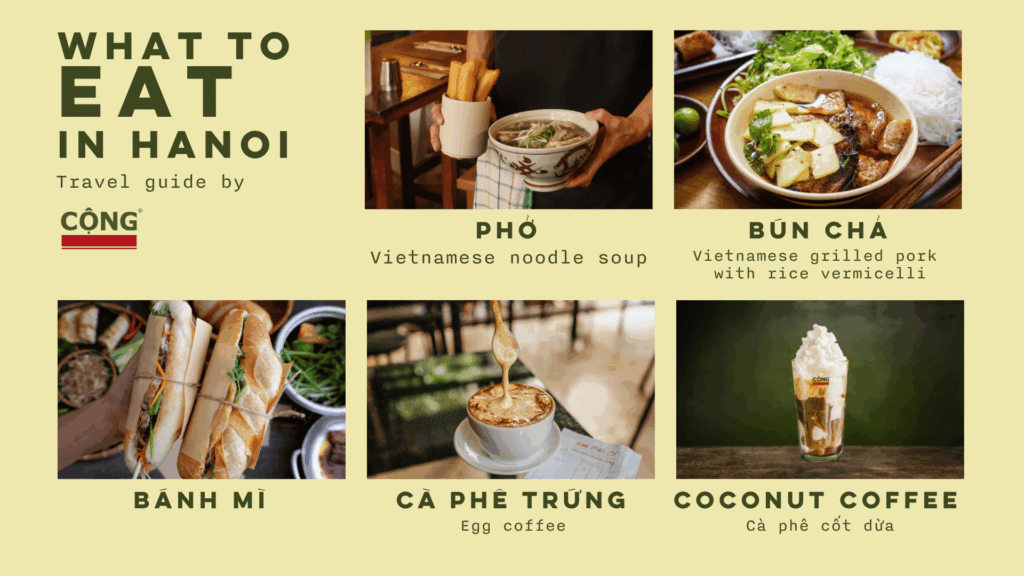
Phở (Vietnamese noodle soup) – The city’s most iconic dish, phở consists of rice noodles served in a fragrant broth simmered for many hours and topped with beef or chicken. Many Hanoians enjoy it with crispy fried dough stick (quẩy) or a soft-boiled egg for an even heartier meal.
Bún Chả (Vietnamese grilled pork with rice vermicelli) – Made famous internationally after President Obama shared a meal of bún chả in Hanoi, this dish combines grilled pork, rice vermicelli, fresh herbs, and a sweet-savoury dipping sauce. It is typically eaten at lunch and remains one of the capital’s most beloved specialties.
Bánh Mì – Vietnam’s take on the sandwich features a crisp baguette filled with pâté, grilled meats, fried eggs, pickled vegetables, herbs, and chilli. It is a popular breakfast and street food option, often enjoyed alongside a cup of Vietnamese coffee.
Egg Coffee (Cà phê trứng) – Invented in Hanoi in the 1940s, egg coffee is made by whisking egg yolk with condensed milk into a velvety cream that sits atop strong Vietnamese coffee. Rich, aromatic, and surprisingly light, it has become one of the city’s most distinctive drinks.
Coconut Coffee (Cà phê cốt dừa) – One of the most popular modern drinks in Vietnamese coffee culture, combining the bold flavor of traditional Vietnamese coffee with a smooth, creamy coconut blend. Originally inspired by tropical ingredients and local café innovation, it has become a favorite among both locals and international visitors.
The Best Time to Visit Hanoi
Hanoi experiences four distinct seasons, each offering a different perspective on the city. The best time to visit depends on what you hope to experience, but autumn (September to November) is widely considered the most pleasant.
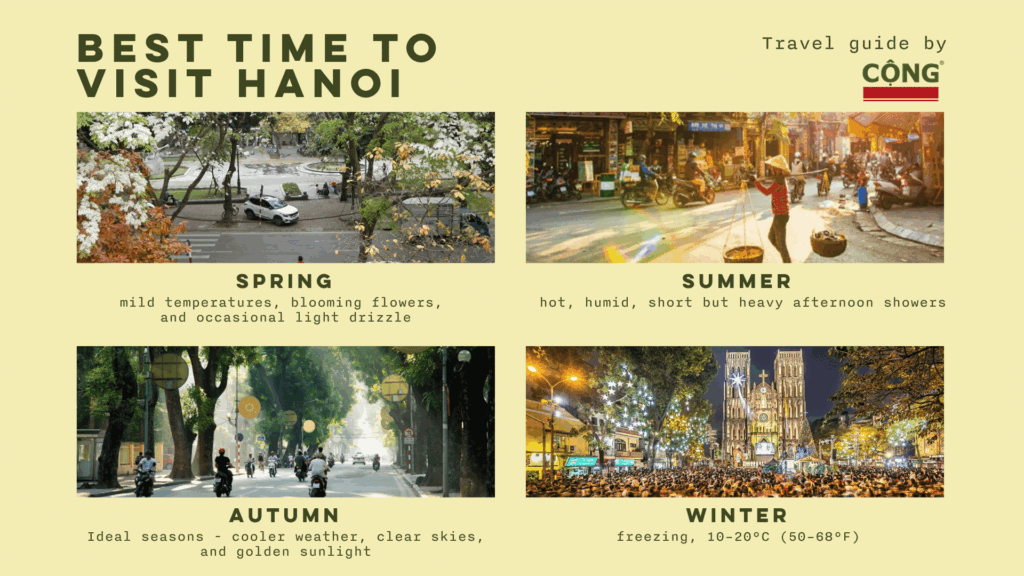
Spring brings mild temperatures, blooming flowers, and occasional light drizzle. Parks and lakes become particularly picturesque, making it an excellent season for walking through the Old Quarter or enjoying outdoor cafés.
Hanoi’s summers are hot, humid, and often interrupted by short but heavy afternoon showers. While temperatures can exceed 35°C (95°F), this is also the season for tropical fruits, refreshing desserts, and vibrant evening street food scenes.
Autumn is Hanoi at its finest. Cooler weather, clear skies, and golden sunlight make it the ideal time to explore the city’s landmarks on foot. This is also the season of cốm (green rice), a cherished Hanoi specialty, and tree-lined streets around Hoàn Kiếm Lake take on a particularly romantic atmosphere.
Winter in Hanoi is freezing, with temperatures typically ranging from 10–20°C (50–68°F). Misty mornings and crisp evenings create the perfect setting for warming up with a steaming bowl of phở or a rich cup of egg coffee.
Experience Hanoi’s Coffee Culture in Paris
For anyone who reads about Hanoi’s egg coffee and coconut coffee and wishes there were a way to taste them without booking a flight, that experience already exists in Paris. Cộng Cà Phê was founded in Hanoi in 2007 and built its identity around the city’s own coffee tradition, strong Robusta beans, slow phin brewing, and the kind of unhurried ritual that turns a coffee break into something worth lingering over.
It is not a substitute for the Old Quarter, but for anyone who has read this far and started craving that first sip, it is the closest version of it in Paris.
Curious to taste Hanoi’s coffee culture for yourself? Follow Cộng Cà Phê France on Instagram for a look inside the space, or visit 18 Rue Volney, 75001 Paris, to try the coconut coffee and salted egg cream collection in person.
Frequently Asked Questions About Hanoi
Do people speak English in Hanoi? Yes! In hotels, restaurants, and tourist areas, English is widely spoken.
What is the currency in Hanoi Vietnam? The Vietnamese đồng (VND). Cash is widely used, especially for street food and markets. ATMs are plentiful in Hanoi’s central districts.
Is Hanoi or Ho Chi Minh City better for a first visit? They offer quite different experiences. Hanoi is older, quieter, and more architecturally layered. Ho Chi Minh City is faster, more commercially energetic, and more international in feel. For food, history, and atmosphere, Hanoi rewards first-time visitors who want to understand Vietnam rather than simply move through it.
Can I find real Vietnamese coffee in Paris?
Yes. Cộng Cà Phê in the 1st arrondissement brews with Vietnamese Robusta using the traditional phin filter method, the same approach used across Hanoi, rather than substituting in a standard espresso base.
Is Cộng Cà Phê in Paris connected to the original Hanoi brand?
Cộng Cà Phê was founded in Hanoi in 2007, and its Paris location carries the same coffee tradition and visual identity, drawing on the old Hanoi aesthetic that defines the brand.
Leave a Reply